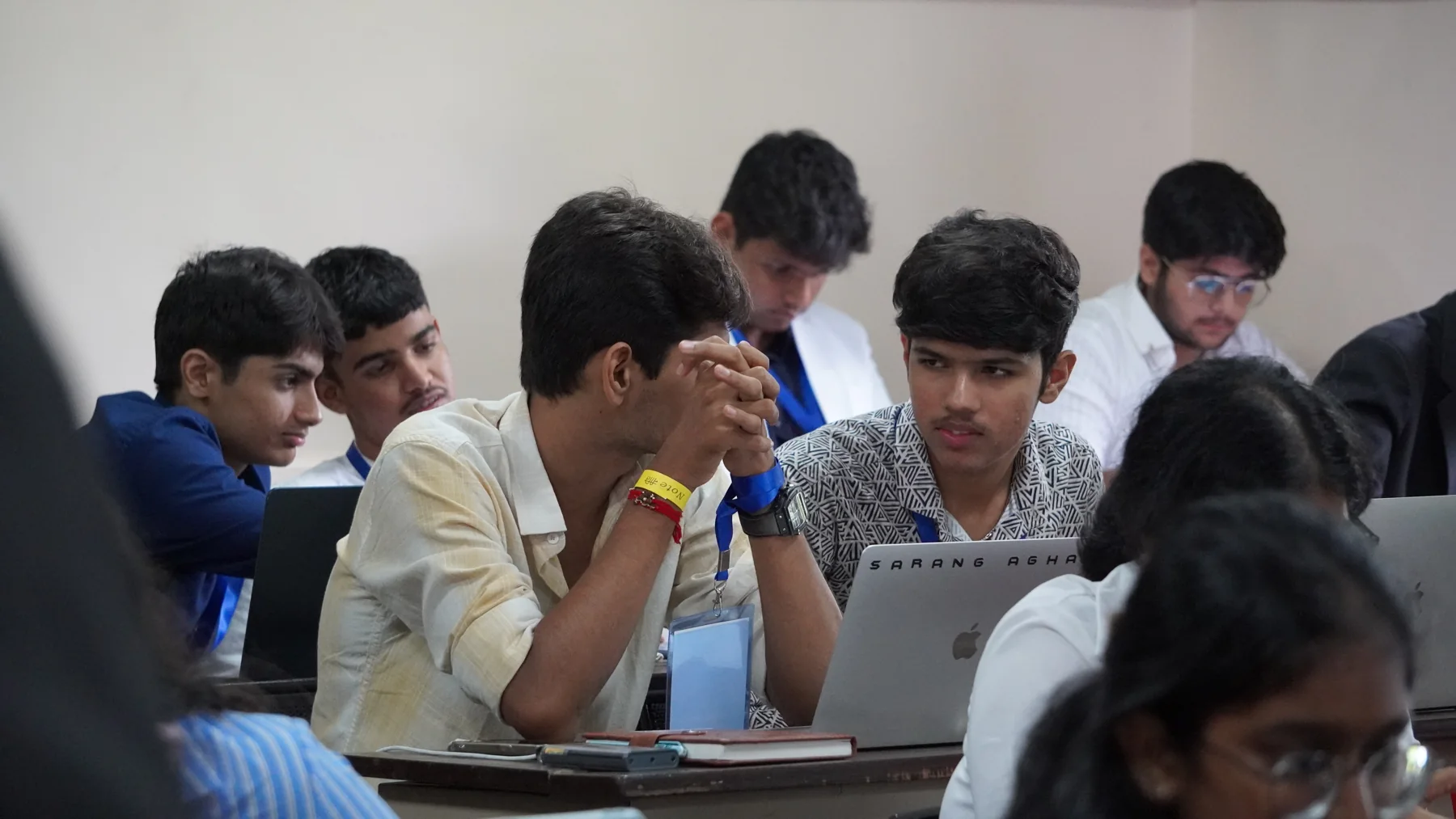
At Élan, the answer starts with the programme itself. Students organise the summit, take responsibility for a cabinet and decide how to respond when the situation changes.
In session Mulshi, 2026
01
Our mission
Give students work that others depend on.
It’s one thing to deliver a prepared speech. It’s another to sit beside two teammates, hear an objection you hadn’t considered and work out which part of your plan still holds. Élan exists to give students room to do that second kind of work.
That means giving a delegate a decision to make, an organiser a responsibility they can call their own, and both a chance to explain what they would change next time.
02 / In practice
Two sides of the same summit.
Inside a cabinet
The Finance Minister may be able to fund relief or infrastructure, but not both. The Foreign Affairs Minister has to consider what neighbouring countries will do. The Head of State has to bring those views together. A good proposal is one the whole cabinet can defend.
A programme change reaches far beyond the person who makes it. Logistics needs a room ready, outreach needs the right information for schools, and the social media team needs to know what it can announce. Committee work gives students practice in knowing who else needs to hear from them.
We want students from different schools to be able to walk into the same room and work as peers. Knowing the vocabulary, having competed before or arriving with friends should never be the price of joining the conversation.
That gives us a practical standard for each edition: can a newcomer understand their role, see where their judgement matters and find someone to ask when they’re unsure? Can a quieter student’s idea shape the cabinet’s decision, even if someone else presents it?
We’d like students to take that habit home. The next time their class or club has a decision to make, they might be the person who asks whose view is missing.